 Loading... Please wait...

Categories
New Products
-
 COP$4,068,320.77

-
 COP$1,878,368.66
-
 COP$1,760,766.00
-
 COP$4,284,455.38
-
 COP$1,760,766.00
Our Newsletter
- Home
- UV Measurement
- Jelight J-221 Longwave UV Intensity Meter
Jelight J-221 Longwave UV Intensity Meter


Product Description
Jelight J-221
is a compact, self-powered analog UV intensity meter designed to measure longwave ultraviolet irradiance with peak sensitivity at 365 nm. Featuring two measurement scales and a detachable sensor, it supports UV lamp performance monitoring, laboratory measurements, and quality-control applications.
Applications
UV-A Lamp Performance Monitoring
Measures longwave UV irradiance to monitor lamp performance and identify changes in output over time. Consistent sensor placement allows comparative measurements for evaluating lamp condition.
Laboratory Quality Control
Supports routine UV-A intensity measurements at laboratory work surfaces and specified distances from ultraviolet sources. Repeatable readings help verify irradiation conditions during inspection and quality-control procedures.
UV-A Inspection and Process Verification
Measures suitable longwave UV sources used in fluorescence inspection and other UV-A-dependent processes. The remote sensor allows irradiance measurements at selected positions within the working area.
Features
- Two selectable analog measurement scales accommodate low- and higher-intensity UV-A sources.
- Detachable sensor with a 1.2 m (4 ft) extension cord supports remote irradiance measurements.
- Self-powered photovoltaic operation eliminates the need for batteries or external power.
- Included contrast filter enables correction of infrared interference when measuring suitable UV sources.
- Approximately 5X attenuation screen permits relative measurements of high-intensity UV lamps beyond the normal scale.
- Individually serialized meter and sensor provide traceability to NIST-referenced calibration standards.
Specifications
| Instrument Type | Analog UV Intensity Meter |
| Primary Measurement Wavelength | 365 nm (UV-A / Longwave) |
| Sensor Spectral Range | 300–400 nm |
| Sensor Peak Sensitivity | 365 nm |
| Measurement Range — A Scale | 0–1,200 µW/cm² |
| Measurement Range — B Scale | 1,000–6,000 µW/cm² |
| Minimum Detector Limit | 20 µW/cm² |
| Display | Analog, Dual-Scale |
| Sensor Configuration | Detachable, Remote-Capable |
| Sensor Cable Length | 1.2 m (4 ft) |
| Power Source | Self-Powered Photovoltaic |
| Dimensions | 76 × 76 × 76 mm (3 × 3 × 3 in) |
| Weight | 0.25 kg (9 oz) |
Documentation
Frequently Asked Questions
Does the J-221 require a correction when measuring B-100 mercury-vapor UV lamps?
Yes, the J-221 is calibrated for longwave phosphor-coated lamps and reads approximately 35% high when measuring a 365 nm line source such as a B-100 lamp. Multiply the indicated irradiance by 0.74 to obtain the manufacturer's corrected estimate.
Can the J-221 measure UV intensities above 6,000 µW/cm²?
The included reduction screen allows relative measurements of higher-intensity UV sources by attenuating the radiation reaching the sensor. Its attenuation is approximately 5X, but readings taken with the screen are not calibrated absolute irradiance measurements.
How can infrared interference be corrected when using the J-221?
Take one reading without the contrast filter, then a second reading with the clear snap-on filter installed. Multiply the filtered reading by 1.06 and subtract it from the unfiltered reading to estimate the UV-only irradiance.
How can I obtain consistent readings when comparing UV lamp output?
Check the meter's zero with the sensor disconnected and the display upright, then maintain the same sensor position, distance, and orientation for each measurement. Readings taken directly against a lamp tube are useful for relative performance comparisons but do not represent the lamp's total UV output.
How often should the J-221 be recalibrated?
The manufacturer recommends recalibration at least every six months to maintain measurement accuracy and calibration traceability. Contact ScienceLighting for assistance with current calibration-service arrangements.
Warranty
This product is covered by a 12-month warranty against defects in materials and workmanship. Inspect the product before use and contact ScienceLighting support if any defects or issues are identified.
Ordering
Have additional questions? Contact ScienceLighting at (650) 961-9031 or sales@sciencelighting.com.
Warranty Information

Currency Converter
Choose a currency below to display product prices in the selected currency.
-
 US Dollar
-
 EURO - EUROPEAN UNION
-
 JPY -JAPAN YEN
-
 CAD - CANADA
-
 INR - INDIA
-
 CNY - CHINA
-
 MXN - MEXICO
-
 GBP - GREAT BRITAIN
-
 SGD - SINGAPORE
-
 KRW - SOUTH KOREAN REPUBLIC
-
 AUD - AUSTRALIA
-
 SAR - SAUDI ARABIA
-
 ZAR - SOUTH AFRICAs
-
 CHF - SWITZERLAND
-
 ARA - ARGENTINA
-
 BRL - BRAZIL
-
 CLP - CHILE
-
 COP - COLOMBIA
-
 DKK - DENMARK
-
 IDR - INDONESIA
-
 NOK - NORWAY
-
 NZD - NEW ZEALAND
-
 PHP - PHILIPPINES
-
 PLN - POLAND
-
 SEK - SWEDEN
-
 TWD - TAIWAN
-
 UAH - UKRAINE
-
 THB - THAILAND
-
 MYR - MALAYSIAN RINGGIT
-
 AED - UNITED ARAB EMIRATES
-
 BGN - BULGARIA
-
 HUF - HUNGARY
-
 CZK - CZECH REPUBLIC
-
 ILS - ISRAEL
-
 EGP - EGYPT
-
 TRY - TURKEY
-
 RON - ROMANIA
-
 KES - KENYA
-
 PKR - PAKISTAN
-
 IQD - IRAQ
-
 KWD - KUWAIT
-
 VND - VIET NAM
-
 JMD - JAMAICA
-
 DOP - DOMINICAN REPUBLIC
-
 JOD - JORDAN
-
 PEN - PERU
Add to Wish List
Related Products
-
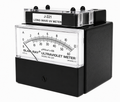 Jelight J-225 Shortwave UV Intensity Meter COP$3,445,344.55
-
 Jelight J-124 Compact UV Lamp Stand COP$241,466.85
-
 Jelight J-129 Handheld UV Lamp Stand COP$622,880.87
-
 Jelight 8 W 365 nm Longwave UV Tube COP$120,685.75
-
 Jelight 4 W 365 nm Longwave UV Tube COP$98,436.60
